If you want to work for a cause education, social welfare, environmental protection, or the arts— you need more than passion. You need a legal structure that gives your organisation credibility, protects your team, and helps you attract funding. A Section 8 Company is one of the most powerful and trusted ways to do that in India.
In this guide, we break down everything you need to know about Section 8 Company registration — what it is, who should register, how to do it step by step, and what it costs in 2026.
What is a Section 8 Company?
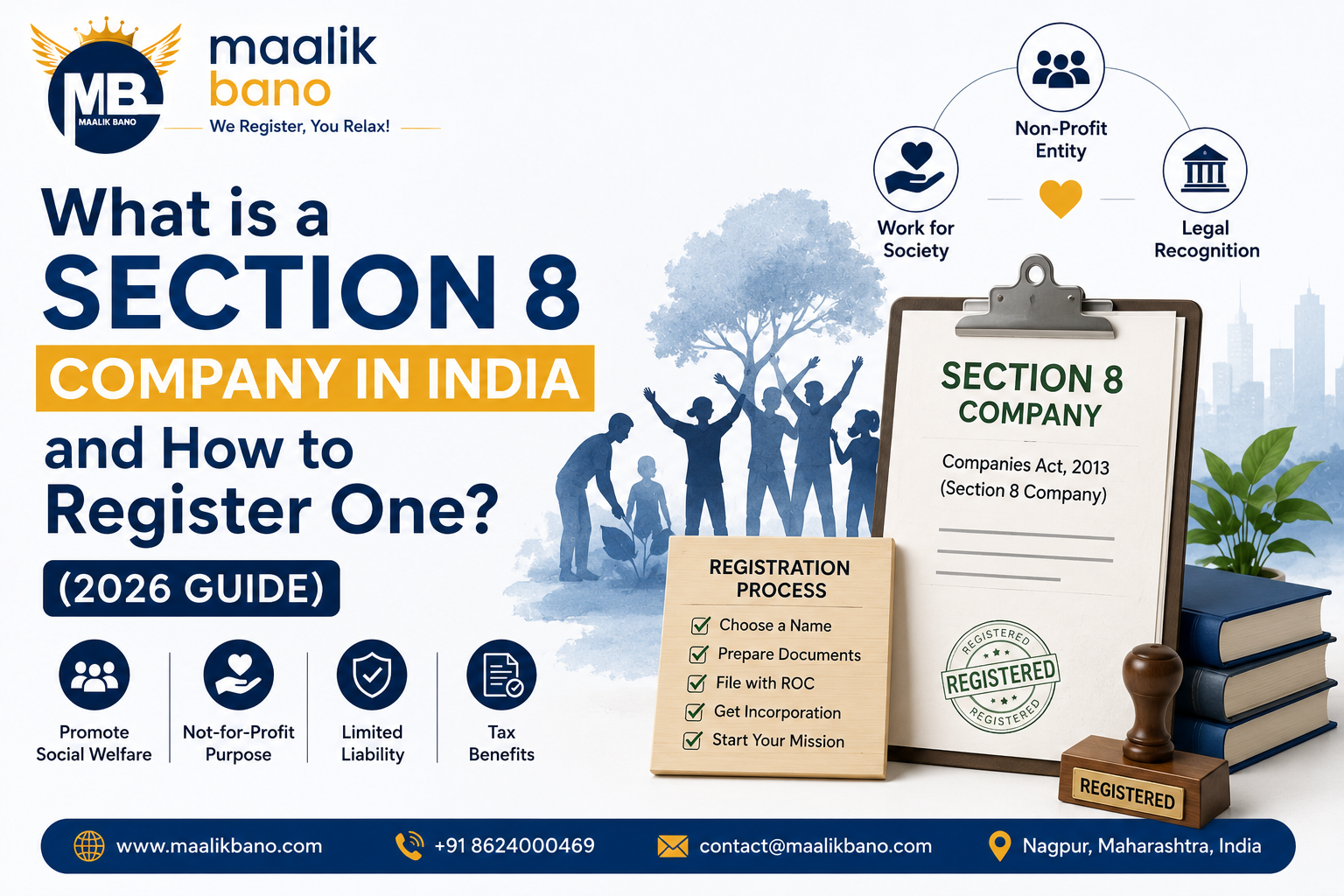
A Section 8 Company is a non-profit organisation registered under Section 8 of the Companies Act, 2013, and regulated by the Ministry of Corporate Affairs (MCA). It is formed to promote charitable objectives such as:
- Education and literacy
- Social welfare and poverty alleviation
- Environmental protection
- Art, culture, and science
- Sports promotion
- Research and development
- Religion and charity
The key distinction from a regular company: profits cannot be distributed to members or shareholders. All income must be reinvested to further the organisation’s stated objectives.
Section 8 Company vs NGO vs Trust
Many people confuse these three structures. Here’s how they differ:
|
Parameter |
Section 8 Company |
Trust |
Society |
|---|---|---|---|
|
Governed by |
Companies Act, 2013 |
Indian Trusts Act, 1882 |
Societies Registration Act, 1860 |
|
Regulator |
MCA |
State Government |
State Government |
|
Credibility |
Highest |
Moderate |
Moderate |
|
CSR Funding Eligibility |
Yes |
Limited |
Limited |
|
Compliance |
Stricter but structured |
Low |
Moderate |
|
Foreign Funding (FCRA) |
Eligible |
Eligible |
Eligible |
Section 8 Companies are considered more credible than trusts and societies because they operate under a central law with mandatory audits, annual filings, and transparent governance.
Who Should Register as a Section 8 Company?
A Section 8 Company is ideal for:
- NGOs looking for a structured legal identity
- Educational institutions running schools, colleges, or skill centres
- Social enterprises working in healthcare, rural development, or women empowerment
- Corporate CSR arms that want to channel CSR funds legally
- Sports clubs and cultural organisations seeking government recognition
- Research bodies engaged in science and technology development
If your organisation receives or plans to receive CSR funding under Section 135 of the Companies Act, registering as a Section 8 Company is one of the most accepted routes.
Key Features of a Section 8 Company
- No minimum capital requirement — you can start without a large upfront investment
- Separate legal entity — the company has its own identity, independent of its members
- Limited liability — members’ personal assets are protected from the company’s liabilities
- No “Limited” or “Private Limited” suffix — the name must include words like Foundation, Forum, Association, Federation, Council, or Confederation
- Tax exemptions available — can apply for 12A and 80G certification under the Income Tax Act
- Eligible for CSR contributions — recognised by corporates and government bodies
- Nationwide operations — a single registration allows you to work across all states in India
Eligibility Criteria for Section 8 Company Registration
Before applying, make sure you meet these requirements:
- Minimum directors: 2 for a Private Limited Section 8 Company; 3 for a Public Limited Section 8 Company
- At least 1 Indian resident director — must have stayed in India for 182+ days in the previous calendar year
- Minimum 2 subscribers to the MoA (Private) or 3 subscribers (Public)
- No minimum paid-up capital is required, although some working capital is necessary for operations
- Objectives must be non-profit — the MoA must clearly define charitable purposes
Documents Required for Section 8 Company Registration
For Directors and Members:
- PAN card
- Aadhaar card / Passport / Voter ID
- Passport-size photograph
- Address proof (bank statement or utility bill not older than 2 months)
For Registered Office:
- Utility bill (electricity/water) not older than 2 months
- Rent agreement or property ownership proof
- NOC from the property owner
Company Documents:
- Memorandum of Association (MoA) — clearly stating non-profit objectives
- Articles of Association (AoA) — must include prohibition on dividend distribution
- INC-12 form (application for Section 8 license)
Step-by-Step Section 8 Company Registration Process
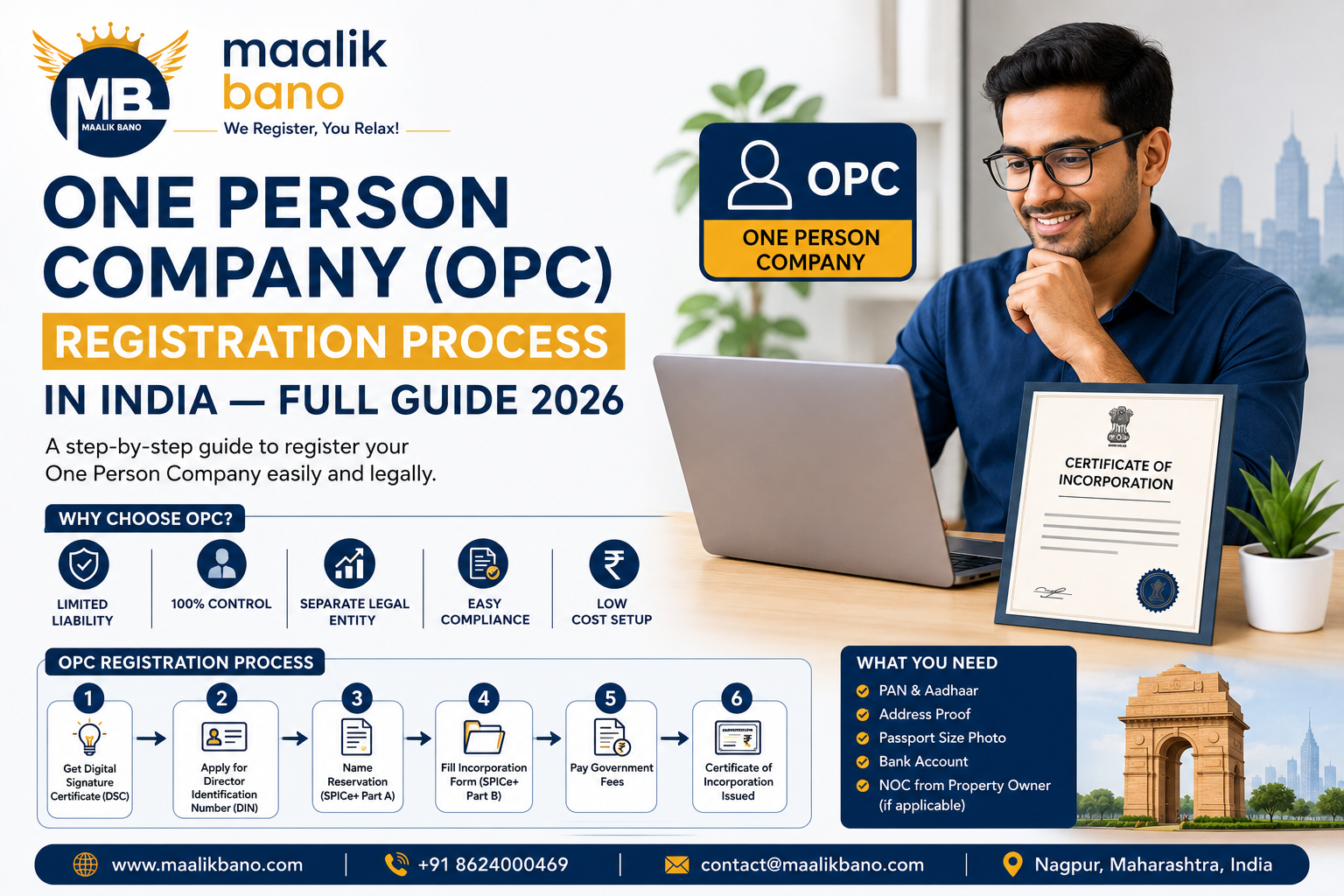
Step 1: Obtain Digital Signature Certificates (DSC)
All proposed directors must obtain a DSC from a government-approved certifying authority such as eMudhra or Sify. Since the registration process is entirely online, digital signatures are mandatory. Timeline: 1–2 days
Step 2: Apply for Director Identification Numbers (DIN)
Each director needs a DIN, which can be applied for through the SPICe+ form during incorporation. Timeline: 1–2 days
Step 3: Name Reservation
Apply for name approval through the RUN (Reserve Unique Name) service on the MCA portal. The proposed name must contain words like Foundation, Forum, Association, Federation, Council, or Confederation. Submit 2 name preferences. Approved names are valid for 20 days. Timeline: 2–3 days
Step 4: Apply for Section 8 License (INC-12)
File Form INC-12 with the Registrar of Companies to apply for a license to operate as a Section 8 Company. The MCA may seek clarifications or publish a public notice for objections before granting the license. Timeline: 5–10 working days
Step 5: Draft MoA and AoA
The MoA must clearly define the non-profit objectives under Section 8(1). The AoA must include a clause prohibiting dividend distribution to members.
Step 6: File SPICe+ Form for Incorporation
Submit the SPICe+ form on the MCA portal along with all documents. This single form covers company incorporation, DIN allotment, PAN and TAN application, and EPFO/ESIC registration.
Step 7: Receive Certificate of Incorporation
Once approved, the Registrar issues the Certificate of Incorporation (CoI) along with a unique Corporate Identity Number (CIN). Overall Timeline: 15–25 working days
Step 8: Post-Registration Steps
- Apply for 12A registration (income tax exemption for the organisation)
- Apply for 80G certification (allows donors to claim tax deductions)
- Register on NGO Darpan (Government portal for NGOs)
- Apply for CSR-1 if you plan to receive CSR funds
- Apply for FCRA registration if you intend to receive foreign donations
Section 8 Company Registration Fees in 2026
|
Component |
Private Section 8 |
Public Section 8 |
|---|---|---|
|
Government Fee |
₹7,000 – ₹15,000 |
₹20,000 – ₹50,000 |
|
Professional Fee |
₹15,000 – ₹25,000 |
₹30,000 – ₹50,000 |
|
Additional Charges |
₹2,500 – ₹3,000 |
₹3,000 – ₹5,000 |
|
Approximate Total |
₹25,000 – ₹45,000 |
₹55,000 – ₹1,00,000 |
Stamp duty on MoA and AoA is exempted in most states for Section 8 Companies, which is a significant cost saving compared to regular companies.
Key Benefits of Section 8 Company Registration
- Tax Exemptions via 12A and 80G: After obtaining 12A registration, the company’s income is exempt from income tax. With 80G certification, donors can claim deductions on their contributions — making fundraising much easier.
- Eligibility for CSR Funding: Under Section 135 of the Companies Act, 2013, companies with significant net worth or turnover are mandated to spend on CSR activities. A Section 8 Company is one of the eligible recipients.
- High Credibility and Trust: Being regulated under the Companies Act with mandatory MCA filings, Section 8 Companies carry significantly more credibility than trusts or societies — both with government agencies and private donors.
- Limited Liability Protection: Directors and members are not personally liable for the company’s debts. Personal assets remain fully protected.
- Perpetual Succession: The company continues to exist regardless of changes in membership or leadership, ensuring long-term stability for your charitable work.
Annual Compliance Requirements
Once registered, a Section 8 Company must maintain these annual compliances:
- AOC-4 — Filing of financial statements with MCA
- MGT-7 — Annual return filing with MCA
- Income Tax Return — Annual filing with the Income Tax Department
- Statutory Audit — Mandatory annual audit by a Chartered Accountant
- Board Meetings — Minimum 2 per year
Non-compliance can lead to penalties and, in serious cases, revocation of the company’s license.
Section 8 Company vs Private Limited Company — What’s the Difference?
This is a common question for founders who want to do social good but also run a viable business.
|
Parameter |
Section 8 Company |
Private Limited Company |
|---|---|---|
|
Purpose |
Non-profit / charitable |
For-profit business |
|
Profit distribution |
Not allowed |
Allowed |
|
Tax benefits |
12A, 80G exemptions |
Standard corporate tax |
|
CSR funding |
Eligible to receive |
Required to spend (if applicable) |
|
Fundraising |
Donations, grants |
Equity, loans, investment |
|
Best for |
NGOs, social welfare orgs |
Startups, businesses |
If your goal is to run a profitable business — even one with a social mission — a Private Limited Company gives you the flexibility to grow, raise funding, and reward your team. Many social entrepreneurs register a Private Limited Company first and set up a Section 8 entity separately for their CSR or non-profit arm.
Frequently Asked Questions
Can a Section 8 Company pay salaries to employees? Yes. Employees and directors can receive reasonable salaries. However, profits cannot be distributed as dividends.
Can a foreigner be a director? Yes, but at least one director must be a resident of India (182+ days in the preceding year).
Is GST registration required? Only if the organisation provides taxable services and crosses the GST turnover threshold.
How long does registration take? Typically 15–25 working days, provided all documents are accurate and complete.
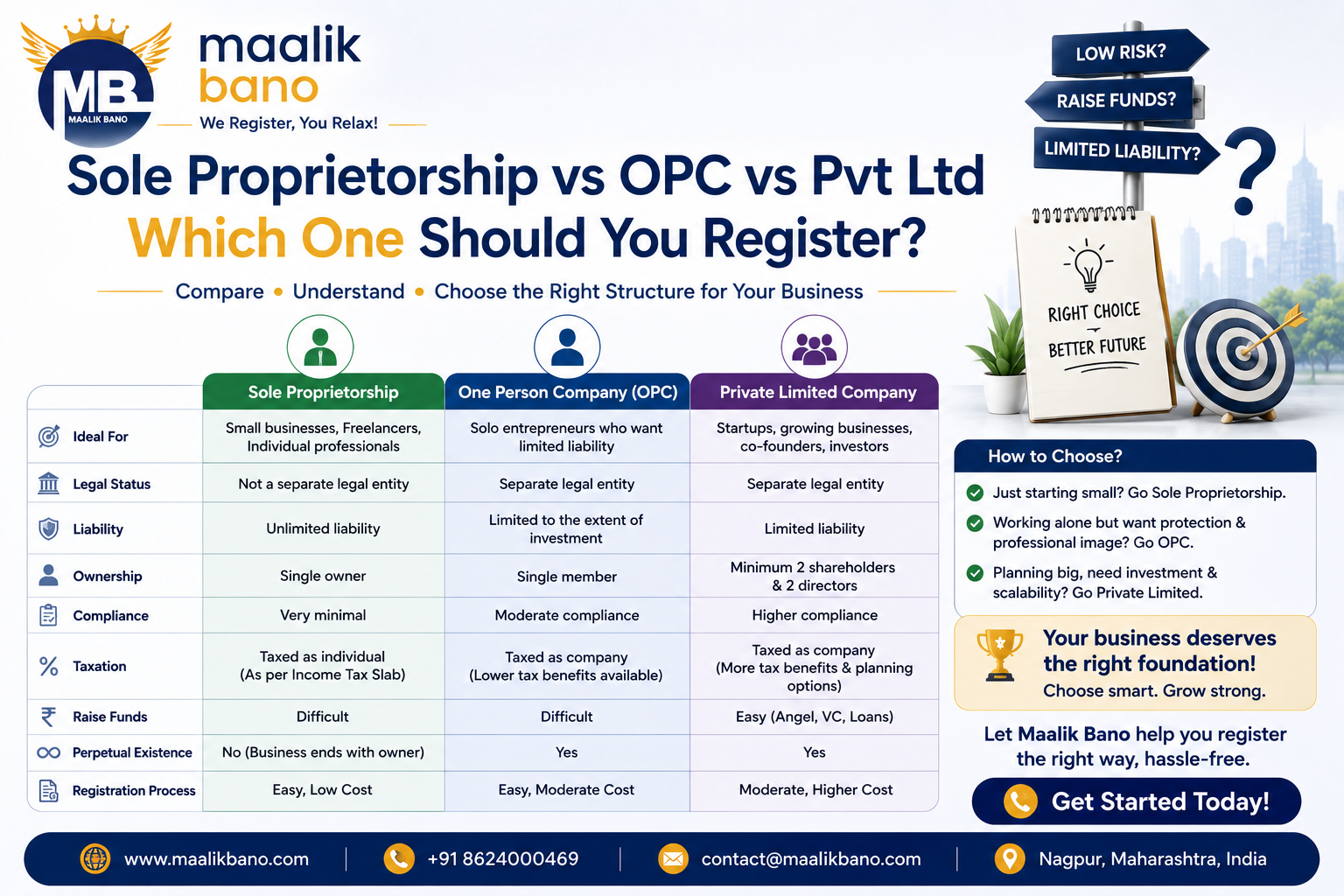
Thinking About a Private Limited Company Instead?
Not every founder is building a non-profit. If you’re starting a business and want limited liability, the ability to raise funding, and a credible legal identity — a Private Limited Company is the most popular and versatile structure in India.
At MaalikBano, we specialise in Private Limited Company registration across India. Our process is fast, transparent, and completely online. Whether you’re a first-time founder in Nagpur, Mumbai, Delhi, or Pune — we handle everything from DSC to Certificate of Incorporation.
Get a free consultation today and register your Private Limited Company in 7 days.