Starting a business in India is exciting, but before you register your company, you need to make one very important decision. Which business structure should you choose?
This one decision affects how much tax you pay, whether you can raise funding, how much compliance you have to handle every year, and how credible your business looks to banks and clients.
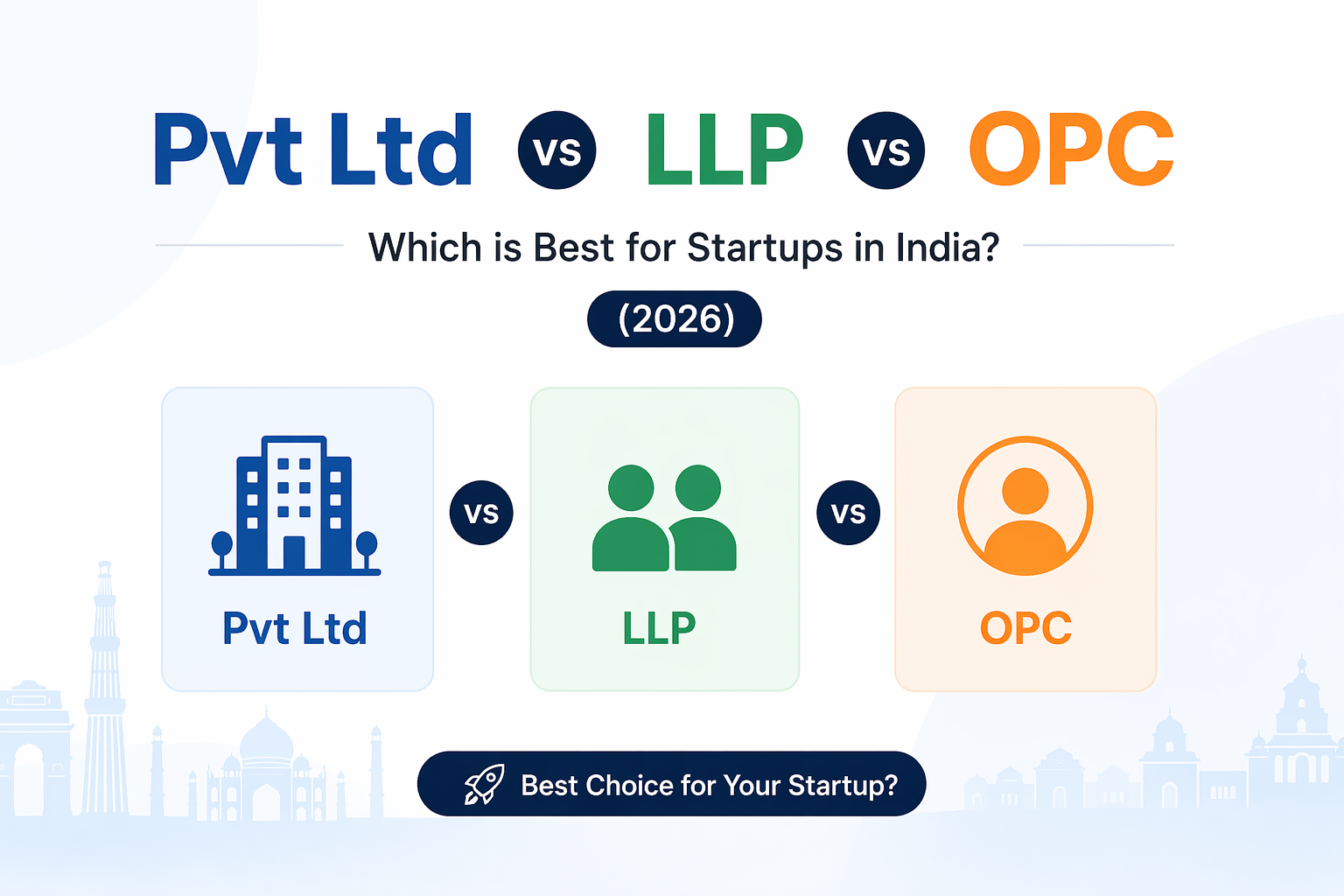
In this article, we will compare the three most popular structures for startups in India, Private Limited Company, LLP, and OPC, and help you figure out which one is right for you.
What Are These Three Structures?
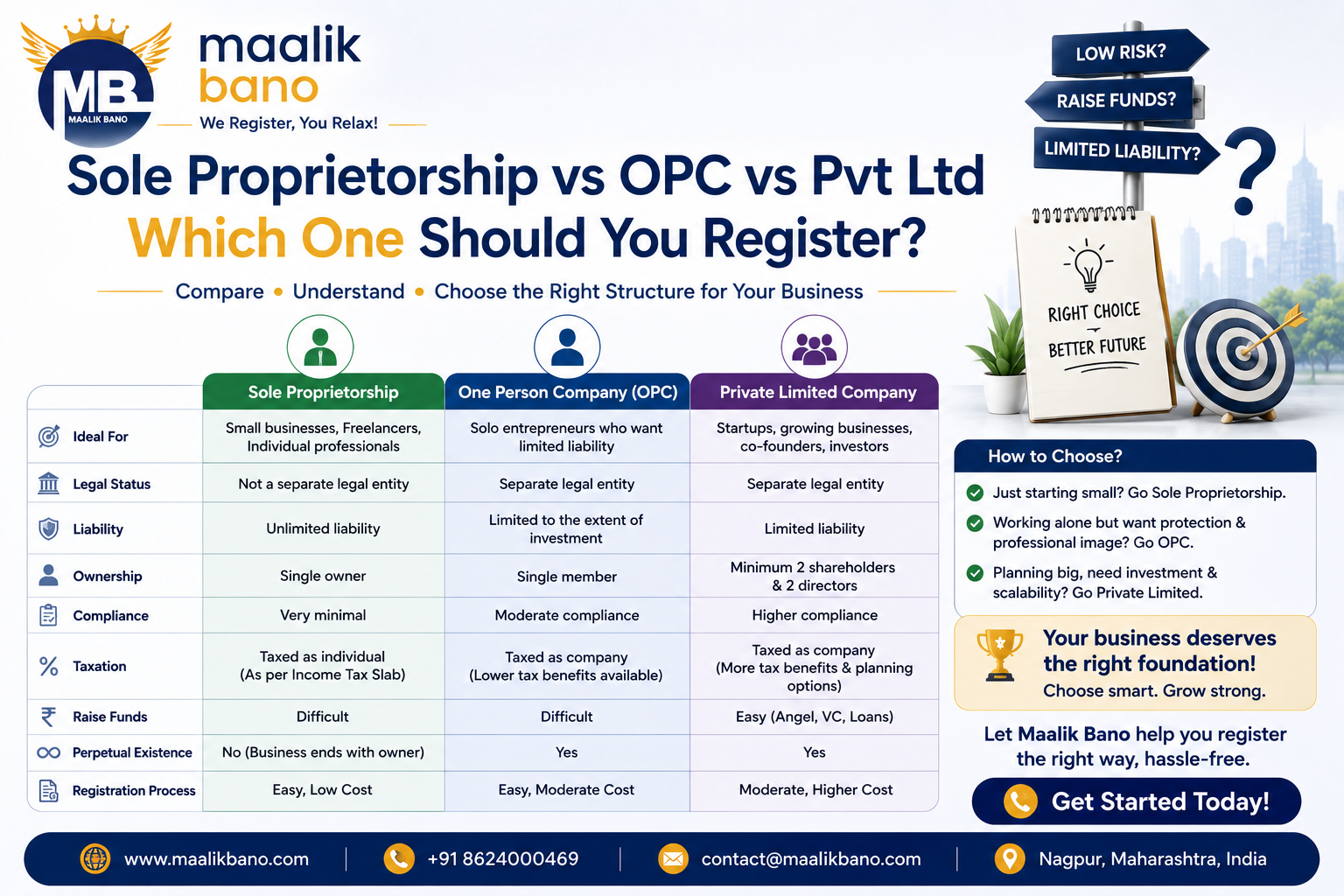
A Private Limited Company is the most popular business structure in India. It requires at least two directors and two shareholders. It is governed by the Companies Act 2013 and regulated by the Ministry of Corporate Affairs.
An LLP or Limited Liability Partnership is a mix between a partnership firm and a company. It requires at least two partners. It is simpler to manage and has lower compliance costs compared to a Private Limited Company.
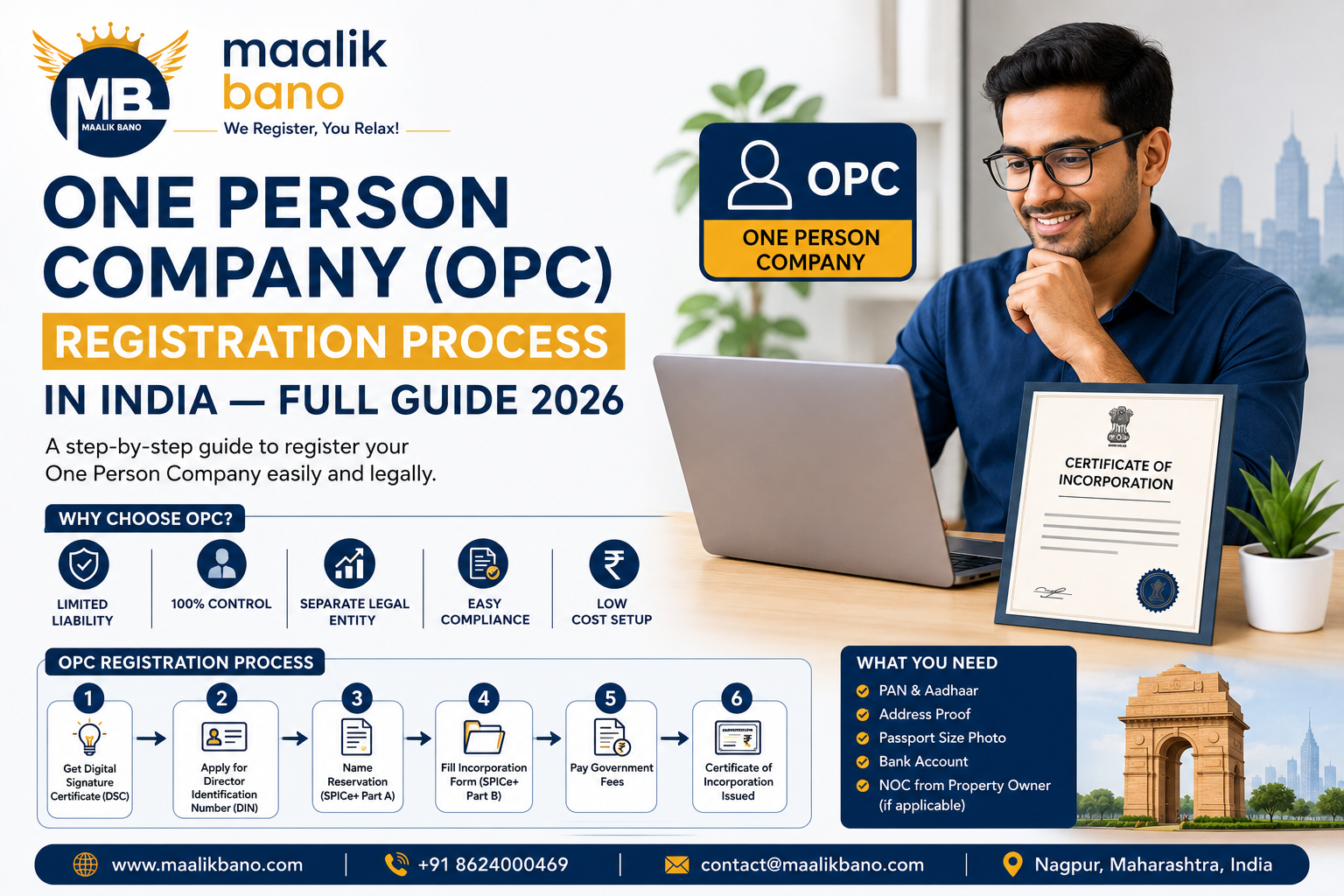
An OPC or One Person Company is designed for solo founders. It allows a single person to run a company with limited liability. It was introduced under the Companies Act 2013 specifically for individual entrepreneurs.
How Are They Different? A Simple Comparison
Here is a side-by-side look at the key differences:
Number of founders needed: A Private Limited Company needs at least 2 directors and 2 shareholders. LLP needs at least 2 partners. OPC needs only 1 person.
Can you raise funding from investors? Private Limited Company: Yes, easily. Investors and VCs prefer this structure. LLP: Very difficult. LLPs cannot issue shares so investors usually say no. OPC: No. OPCs cannot raise equity funding from outside investors.
Annual compliance cost: Private Limited Company: Rs. 30,000 to Rs. 50,000 per year. LLP: Rs. 10,000 to Rs. 20,000 per year. OPC: Rs. 15,000 to Rs. 25,000 per year.
Can you give ESOPs to employees? Private Limited Company: Yes. LLP: No. OPC: No.
Tax rate: All three are taxed as domestic companies at around 22% plus surcharge and cess.
Credibility with banks and clients: Private Limited Company: Very high. LLP: Medium. OPC: Medium to high, better than a sole proprietorship.
Can a foreigner register? Private Limited Company: Yes. LLP: Yes. OPC: No.
Private Limited Company – Who Should Choose It?
A Private Limited Company is the right choice if you are building something big. If you plan to raise money from investors, hire a team, offer ESOPs, or scale your business nationally or internationally, then this is the structure for you.
It gives you the most credibility with banks, large clients, and investors. Almost every VC and angel investor in India prefers to invest in a Private Limited Company because they can hold equity shares.
The downside is that it comes with more compliance. You need to file annual returns, hold board meetings, get your accounts audited, and maintain proper records. The annual maintenance cost is higher than that of LLP or OPC.
Best for: Startups that plan to raise funding, scale fast, hire a team, or build a product or technology business.
LLP – Who Should Choose It?
An LLP is a great choice if you are starting a service-based business with a partner and you do not plan to raise outside investment anytime soon.
It is popular among CA firms, law firms, consulting businesses, and digital agencies because it gives you limited liability protection at a much lower compliance cost. You do not need a mandatory audit unless your turnover crosses ₹1 crore. This limit can go up to ₹10 crore if all sales and purchases are conducted through banking channels.
The biggest disadvantage of an LLP is that it cannot issue shares. This means if you ever want to raise funding from a VC or angel investor, you will have to convert your LLP into a Private Limited Company, which is a time-consuming and expensive process.
Best for: Professionals, consultants, service businesses, and small firms that want low compliance and do not plan to raise equity funding.
OPC – Who Should Choose It?
An OPC is perfect if you are a solo founder who wants the benefits of a company without needing a second person.
It gives you limited liability, which means your personal assets are protected if your business faces a loss or legal dispute. It also gives you more credibility than a sole proprietorship when dealing with banks and clients.
However, there are some important restrictions. An OPC can have only one shareholder, so you cannot bring in investors directly.
Best for: Solo founders, freelancers, consultants, and individual entrepreneurs who want limited liability and a corporate identity without needing a co-founder.
Which One Should You Choose? A Quick Decision Guide
If you have a co-founder and plan to raise funding, choose a Private Limited Company.
If you have a co-founder but do not plan to raise funding and want low compliance, choose LLP.
If you are a solo founder just starting, choose OPC and convert to a Private Limited Company when you are ready to scale.
If you are a professional like a CA, lawyer, or consultant working with a partner, choose LLP.
If you want to attract top talent with ESOPs, choose a Private Limited Company.
Can You Convert From One Structure to Another?
Yes, you can. Here is how it works:
OPC to Private Limited Company: This is very common and relatively straightforward through the MCA portal.
LLP to Private Limited Company: This is possible, but more complex. It requires agreement from all partners and approval from the Registrar of Companies.
Private Limited Company to LLP: This is possible only if the company has no outstanding liabilities and all shareholders agree.
If you think you might want to raise funding in the future, it is always better to start as a Private Limited Company rather than converting later. Conversion takes time and money.
How MaalikBano Can Help You
If you have read this article carefully, you will notice that for most startups and growing businesses, a Private Limited Company is the strongest choice. It gives you the best credibility, the ability to raise funding, and a solid foundation to scale your business.
At MaalikBano, we specialise in Private Limited Company registration across India. Our process is simple, transparent, and hassle-free. We handle everything from name reservation to your Certificate of Incorporation so you can focus on building your business instead of worrying about paperwork.
If you have decided that a Private Limited Company is the right structure for you, we are here to help you get started.
Frequently Asked Questions
Which is better for a startup, Pvt Ltd or LLP?
If your startup plans to raise funding from investors or VCs, a Private Limited Company is always better. If you are a bootstrapped service business with no plans for external funding, an LLP works well and saves you compliance costs.
Can an OPC raise funding from investors?
No. An OPC cannot issue shares to outside investors. If you want to raise funding, you will need to convert your OPC to a Private Limited Company first.
What is the annual compliance cost for a Private Limited Company?
The approximate annual compliance cost for a Private Limited Company in India is between Rs. 30,000 and Rs. 50,000. This includes audit fees, ROC filings, and other statutory requirements.
Can a single person register a Private Limited Company?
No. A Private Limited Company requires a minimum of two directors and two shareholders. If you are a solo founder, your options are an OPC or bringing in a co-founder.
Which structure has the lowest compliance cost?
An LLP has the lowest compliance cost among the three. Its annual maintenance cost is approximately Rs. 10,000 to Rs. 20,000, and there is no mandatory audit unless turnover crosses Rs. 40 lakh.
Can a foreigner start an OPC in India?
No. Only Indian citizens and residents can register an OPC in India. Foreign nationals can register a Private Limited Company or LLP, subject to FDI policy guidelines.
What happens if my OPC turnover crosses Rs. 2 crore?
If your OPC turnover crosses Rs. 2 crore or the paid-up capital crosses Rs. 50 lakh, you are legally required to convert your OPC into a Private Limited Company as per the Companies Act 2013.
Is a Private Limited Company good for tax savings?
All three structures are taxed at around 22% as domestic companies. However, a Private Limited Company gives you access to more tax benefits under DPIIT Startup India recognition and other government schemes.