Have you ever heard of a community savings group where members pool their money, earn interest on deposits, and borrow from the same fund at lower rates than banks? That’s essentially what a Nidhi Company does, but with full legal recognition under Indian law.
Nidhi Companies are one of the most unique business structures in India. They are popular in the southern states and are increasingly gaining traction across the country as a legitimate way to build a community-based financial institution without requiring RBI approval.
This guide covers everything, including what a Nidhi Company is, eligibility, documents, the step-by-step registration process, compliance requirements, and key benefits.
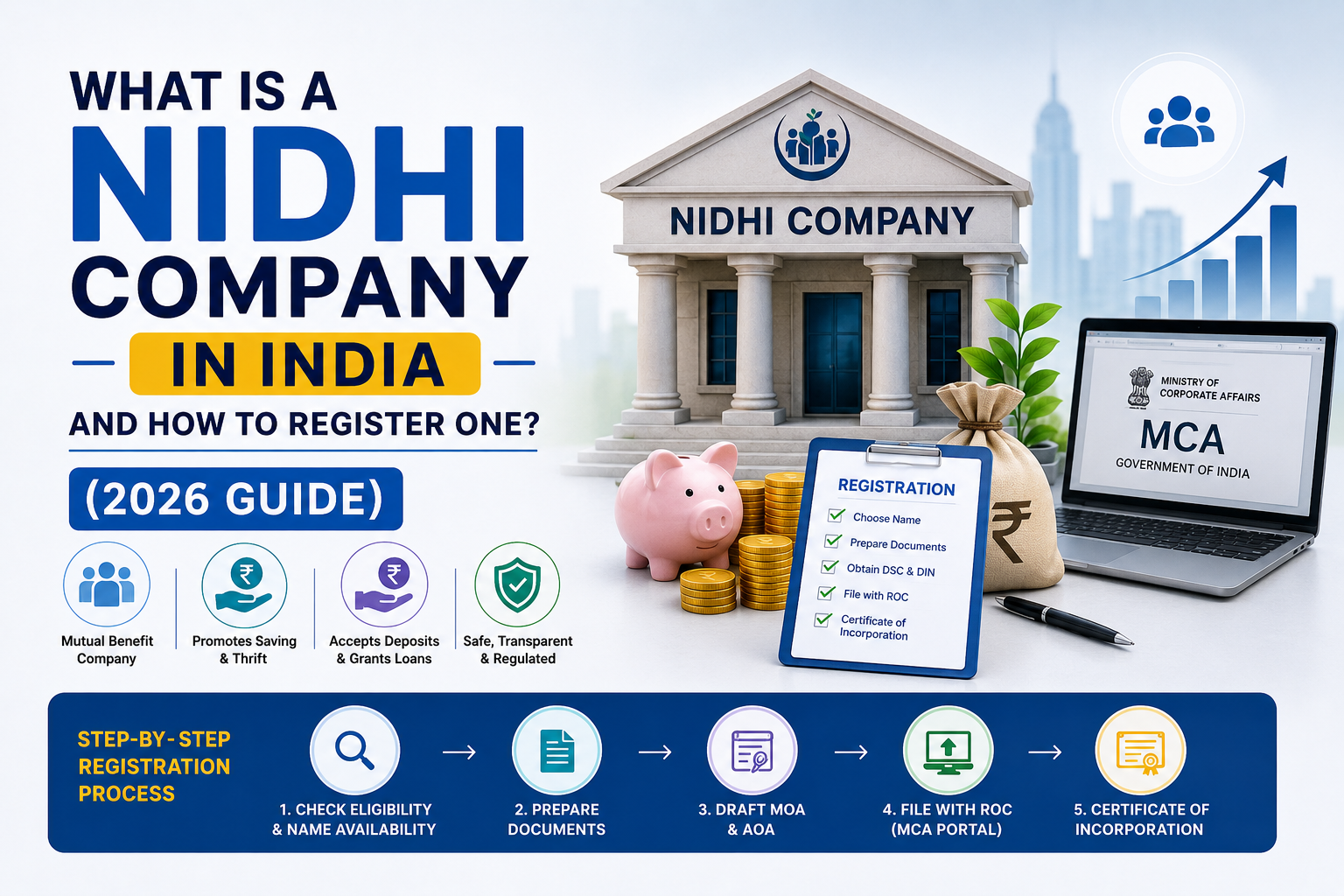
What is a Nidhi Company?
A Nidhi Company is a type of Non-Banking Financial Company (NBFC) incorporated under Section 406 of the Companies Act, 2013 and governed by the Nidhi Rules, 2014. The word Nidhi is a Hindi term meaning “treasure” or “fund”.
The core business of a Nidhi Company is simple: accept deposits from members and lend money to members. All financial transactions happen exclusively between the company and its registered members, making it a true mutual benefit society.
Because Nidhi Companies deal only with their own members (not the general public), they are exempt from several RBI regulations that apply to other NBFCs. The MCA oversees their governance, while the RBI retains limited supervisory powers over financial activities.
How Does a Nidhi Company Work in Practice?
Imagine 50 small business owners in a town who want a reliable way to save money and access low-interest loans without going to a bank. They form a Nidhi Company. Each member contributes through deposits (FDs, RDs, or savings accounts). When any member needs a loan, they borrow from the accumulated pool at a reasonable interest rate. The company earns through the spread between deposit interest paid and loan interest received.
This model has made Nidhi Companies particularly popular in Tamil Nadu, Andhra Pradesh, and Kerala.
Nidhi Company vs NBFC – Key Differences
|
Parameter |
Nidhi Company |
Regular NBFC |
|---|---|---|
|
RBI Registration |
Not required |
Mandatory |
|
Who can it deal with? |
Members only |
General public |
|
Regulated by |
MCA (primarily) |
RBI |
|
Minimum Capital |
₹5 lakh (paid-up) |
₹2 crore (net owned fund) |
|
Deposits from public |
Not allowed |
Allowed (with RBI approval) |
|
Compliance burden |
Lower |
Higher |
Eligibility Criteria for Nidhi Company Registration
To register a Nidhi Company, you must meet these conditions at the time of incorporation:
- Minimum 7 members – at least 3 of whom must be directors
- Minimum 3 directors – all directors must also be members
- Minimum paid-up equity share capital of ₹5 lakh
- Company name must end with “Nidhi Limited” – e.g., “Sunrise Nidhi Limited”
- Must be incorporated as a Public Limited Company
- Only individuals can be members – companies, trusts, or body corporates cannot join
Post-Incorporation Requirements (Within 1 Year)
After registration, a Nidhi Company must fulfil the following within the first financial year to be officially declared a Nidhi Company:
- Minimum 200 members
- Net Owned Funds (NOF) of at least ₹20 lakh
- Deposits must not exceed 20 times the NOF
- File Form NDH-1 within 90 days of the end of the first financial year
If not met, apply for an extension via Form NDH-2 with the Regional Director within 30 days.
Documents Required for Nidhi Company Registration
For Directors and Members:
- PAN card
- Aadhaar card / Voter ID / Driving License / Passport
- Passport-size photograph
- Address proof (bank statement or utility bill, not older than 2 months)
For Registered Office:
- Electricity bill or utility bill (not older than 2 months)
- Rent agreement and NOC from the property owner (if rented)
- Property ownership proof (if owned)
Company Documents:
- Memorandum of Association (MoA), must state the primary objective as promoting savings and providing loans to members
- Articles of Association (AoA)
- SPICe+ form with all attachments
Step-by-Step Nidhi Company Registration Process
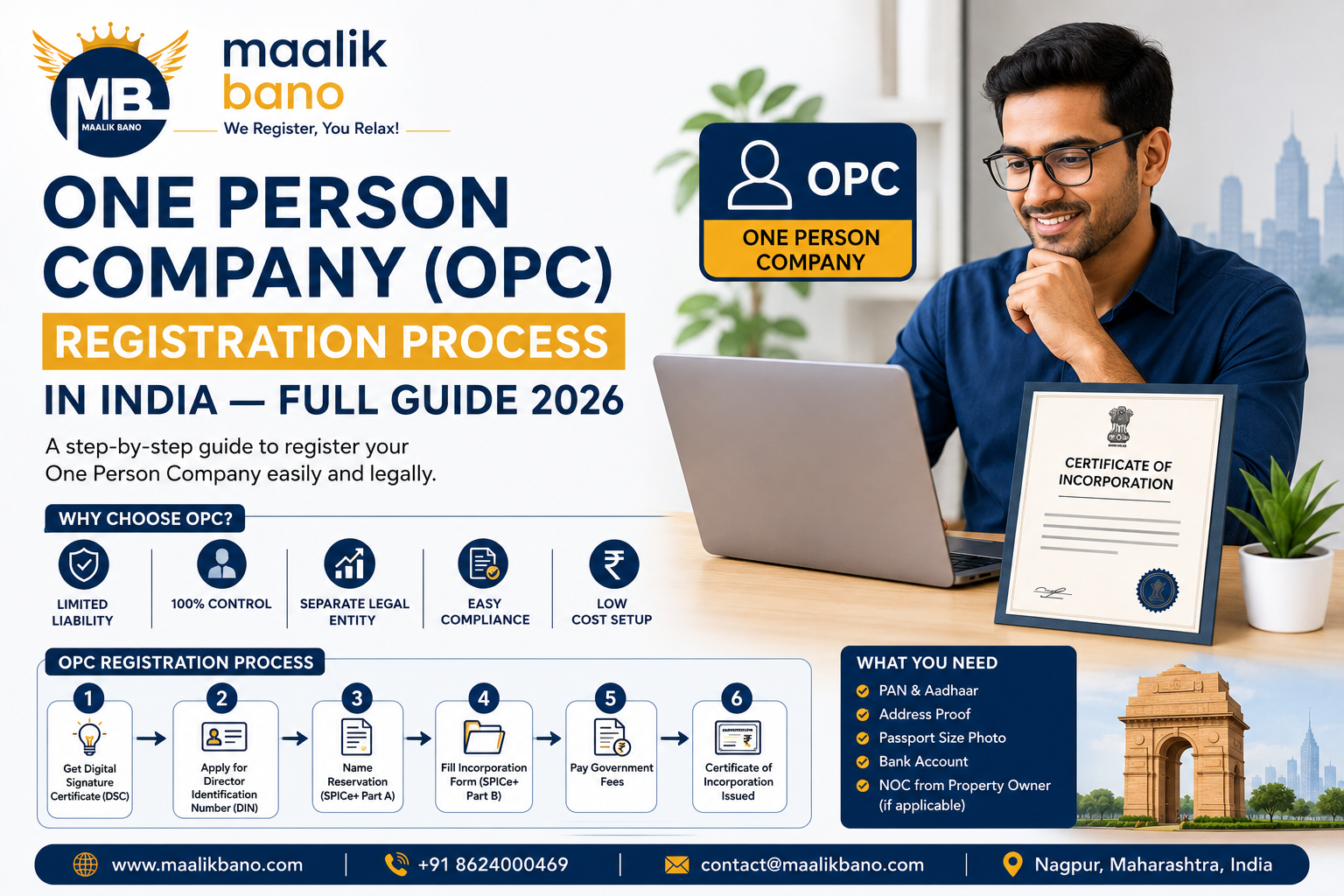
Step 1: Obtain Digital Signature Certificates (DSC)
All proposed directors must obtain a DSC. Required for all MCA filings online. Timeline: 1–2 days
Step 2: Apply for Director Identification Numbers (DIN)
All proposed directors need a DIN, which can be obtained through the SPICe+ incorporation form. Timeline: 1–2 days
Step 3: Name Reservation via RUN
Apply for name approval on the MCA portal with up to 3 name preferences. The name must end with “Nidhi Limited”, be unique, and not conflict with any existing company or trademark. Approved names are valid for 20 days. Timeline: 1–3 days
Step 4: Draft MoA and AoA
The MoA must clearly state that the company’s primary objective is:
- To promote the habit of thrift and savings among members
- To accept deposits from and lend money exclusively to members
- To work for the mutual benefit of all members
Step 5: File SPICe+ Form for Incorporation
Submit the SPICe+ form on the MCA V3 portal with all documents attached. This covers company incorporation, DIN allotment, and PAN/TAN application.
Step 6: Receive Certificate of Incorporation
After MCA approves the application, the Registrar issues the Certificate of Incorporation with the Corporate Identity Number (CIN), PAN, and TAN. Timeline: 10–15 working days
Step 7: Open a Bank Account
Use the CoI, CIN, PAN, and MoA/AoA to open a current account in the Nidhi Company’s name.
Step 8: File NDH-1 After First Financial Year
Within 90 days of the end of the first financial year, file Form NDH-1 to declare compliance with minimum membership and NOF requirements. A practising CA, CS, or CWA must certify this form.
Nidhi Company Registration Cost
|
Component |
Estimated Cost |
|---|---|
|
DSC per director |
₹800 – ₹1,500 |
|
Government Filing Fees |
₹2,000 – ₹5,000 |
|
Stamp Duty on MoA/AoA |
₹500 – ₹2,000 (varies by state) |
|
Professional Fee |
₹8,000 – ₹15,000 |
|
Total Estimated Cost |
₹15,000 – ₹25,000 |
Annual Compliance Requirements for Nidhi Companies
|
Form |
Purpose |
Due Date |
|---|---|---|
|
NDH-1 |
Return of statutory compliances |
Within 90 days of end of first FY |
|
NDH-2 |
Extension application (if needed) |
Within 30 days of end of FY |
|
NDH-3 |
Half-yearly return to ROC |
Within 30 days of end of half-year |
|
MGT-7 |
Annual return with MCA |
Within 60 days of end of FY |
|
AOC-4 |
Filing of financial statements |
Within 30 days of AGM |
|
Income Tax Return |
Annual ITR |
As per IT Act |
|
Statutory Audit |
Mandatory every year |
Before AGM |
Key Benefits of Nidhi Company Registration
- No RBI Approval Required Unlike other NBFCs that require RBI registration and ₹2 crore in net owned funds, a Nidhi Company can begin operations with just ₹5 lakh and no RBI license. This makes it the only legal way to run a loan business in India without RBI approval.
- Low Capital Requirement With just ₹5 lakh as minimum paid-up equity capital, Nidhi Companies are accessible to small community groups.
- Member-Controlled Operations All transactions happen exclusively between the company and its members. No outsider interference.
- Promotes Savings Culture Encourages members to develop disciplined saving habits through regular deposits with interest income.
- Access to Affordable Credit Members can borrow at rates typically lower than banks, secured against gold, property, fixed deposits, or government securities.
- Limited Liability Protection As a company registered under the Companies Act, 2013, members and directors enjoy limited liability. Personal assets are protected.
- Perpetual Succession The company continues to exist even if members or directors exit.
Activities a Nidhi Company CANNOT Do
Understanding restrictions is as important as knowing the benefits:
- Accept deposits or give loans to non-members
- Deal in chit funds, hire-purchase finance, leasing, or insurance
- Issue preference shares, debentures, or other debt instruments
- Open current accounts for members
- Advertise for deposits from the general public
- Engage in microfinance or vehicle finance business
Branch restrictions: A Nidhi Company can open up to 3 branches within the same district only after earning net profits for 3 consecutive years. Branches outside the district require Regional Director approval. A Nidhi Company cannot operate across states, and a separate registration is needed for each state.
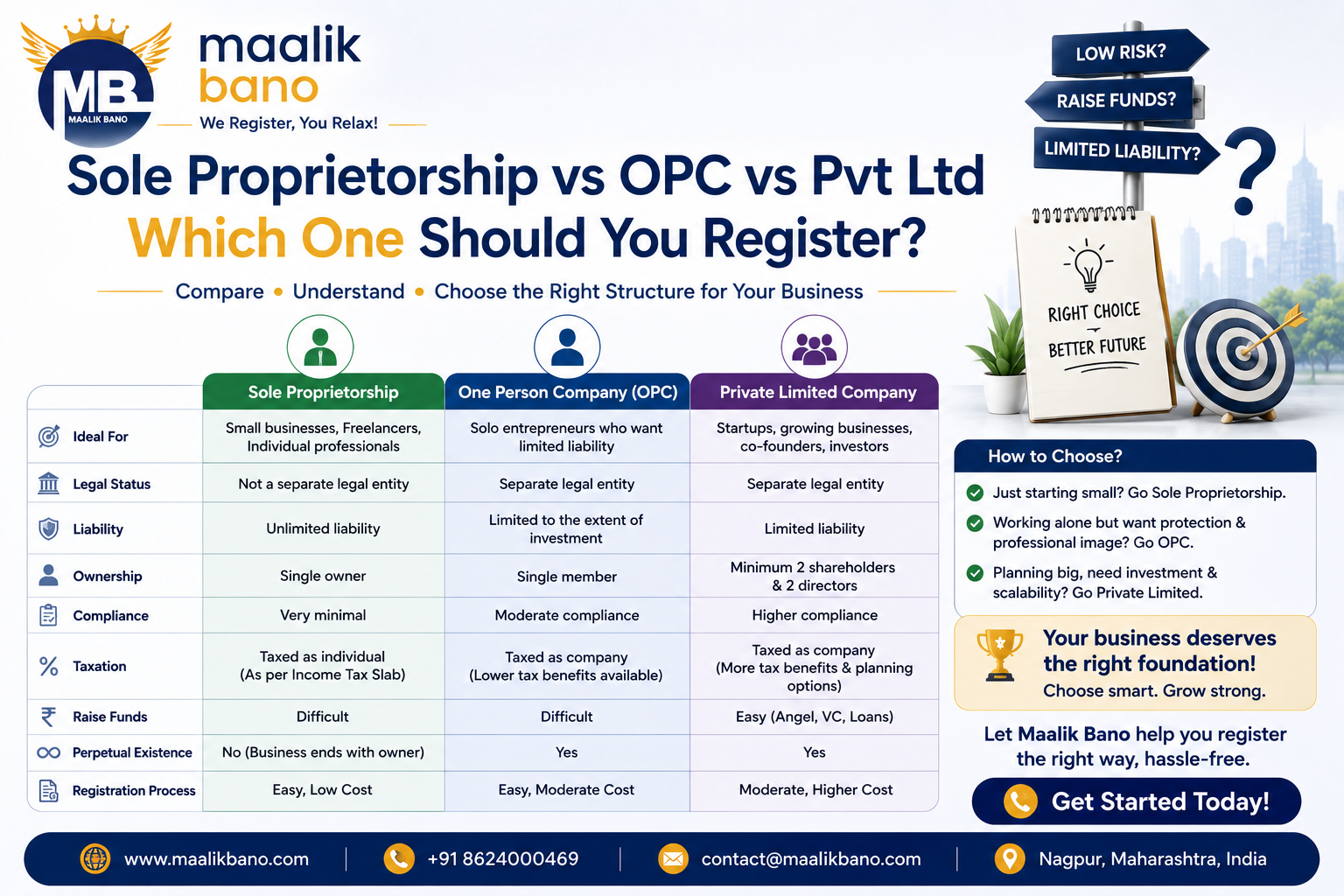
Nidhi Company vs Private Limited Company
If you’re an entrepreneur trying to decide between a Nidhi Company and a Private Limited Company for a business idea, here’s a clear comparison:
|
Parameter |
Nidhi Company |
Private Limited Company |
|---|---|---|
|
Purpose |
Community savings and lending |
Any legal business purpose |
|
Who can you serve? |
Members only |
Anyone |
|
Raise outside investment? |
No |
Yes |
|
Compliance complexity |
Higher (NDH forms + Companies Act) |
Moderate |
|
Geographic reach |
Within a state only |
Pan-India |
|
Growth potential |
Limited by membership |
Unlimited |
If you’re building a business that serves customers beyond a membership circle, wants to raise funding, or plans to scale, a Private Limited Company is the far more flexible and powerful choice.
Frequently Asked Questions
Can a salaried person register a Nidhi Company?
Yes, provided their employment contract does not restrict directorial positions.
What is the maximum interest rate a Nidhi Company can charge on loans?
Maximum 7.5% above the highest deposit interest rate offered by the company.
How many members does a Nidhi Company need within the first year?
Minimum 200 members within 1 year of incorporation to continue accepting deposits.
Can a body corporate become a member of a Nidhi Company?
No. Only individuals can be members.
How long does registration take?
Typically 10–15 working days from the date of filing, provided documents are complete.
Looking to start a business, not a savings society?
Nidhi Companies are a niche structure built specifically for member-based savings and lending. If you’re an entrepreneur who wants to start, run, and grow a real business, sell products, offer services, hire a team, and raise funding, a Private Limited Company is what you need.
It gives you a separate legal identity, limited liability, the ability to raise equity investment, and the credibility to work with large clients, banks, and institutions.
At MaalikBano, we specialise in Private Limited Company registration across India. Our process is fast, affordable, and completely transparent, so you can focus on building your business from day one.
Talk to our team and register your Private Limited Company today.